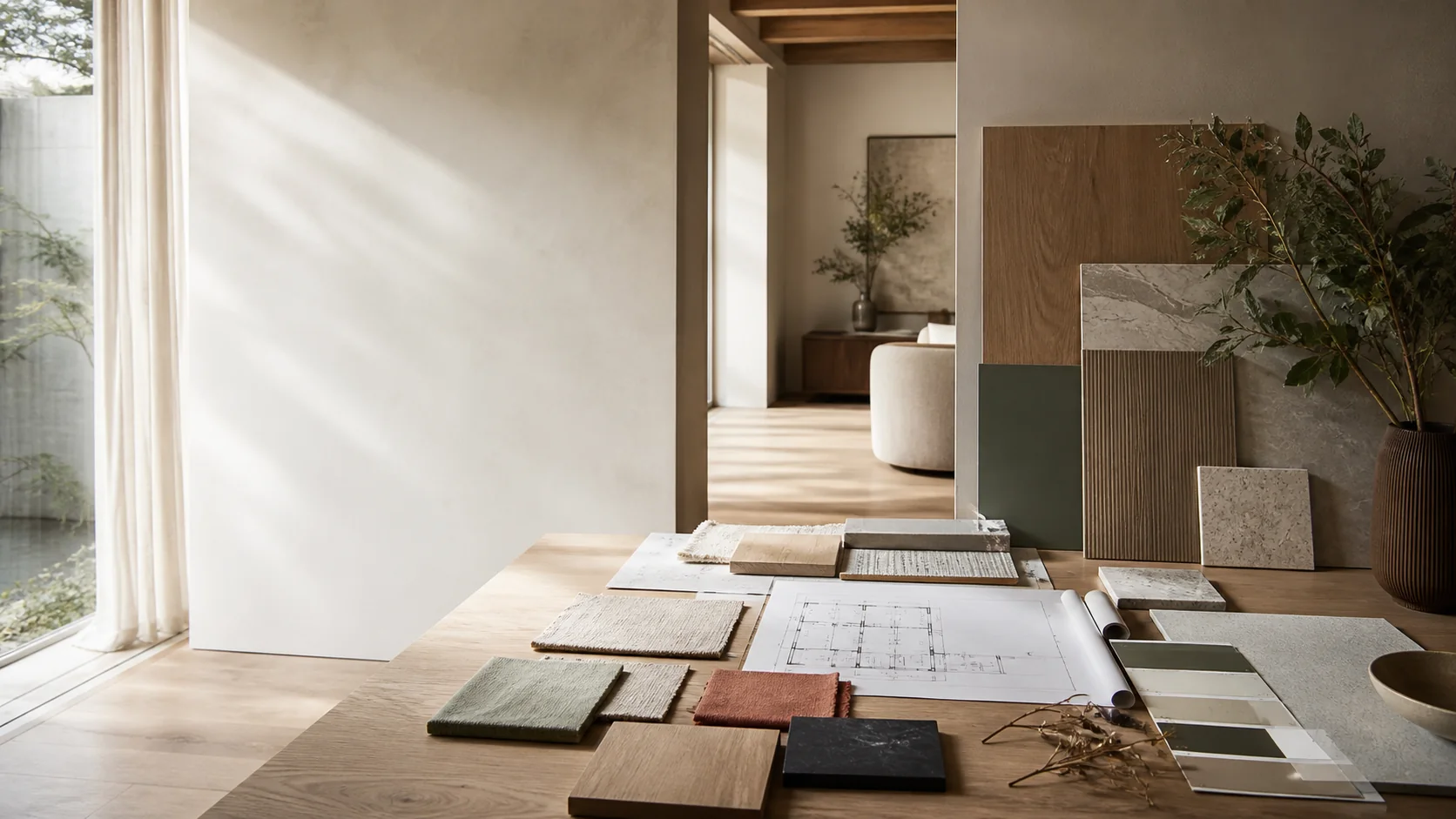
Working context
A room plan should begin with the life that needs to happen inside it. Observe how people enter, move, pause, work, gather, and store everyday things. Record the fixed elements, the useful views, the awkward routes, and the times when daylight helps or hinders. These facts create a stronger brief than a collection of unrelated images.
Light and layout are connected. The location of a seat changes how a window is experienced; the height of storage changes shadow and openness; a circulation route can make a generous room feel crowded. Testing these relationships early allows later choices to support the room instead of compensating for a weak arrangement.
SECTION 01Read the room across a normal day
Visit or photograph the room at several times. Note direct sun, reflected light, glare, deep shadow, exterior lighting, and the tasks that require reliable illumination. Record doors, windows, radiators, outlets, vents, switches, and fixed services. A measured drawing can be simple, but dimensions and constraints should be accurate enough to test clearances and real furniture sizes.
SECTION 02Arrange activities and movement
List the primary and occasional activities, then give each the space, support, and access it needs. Protect comfortable routes between entrances, seating, storage, and work areas. Consider reach, mobility, door swings, and the ability to use one zone without disrupting another. Negative space is functional: it improves movement, makes important elements legible, and gives the composition room to breathe.
SECTION 03Layer light for use and atmosphere
Combine ambient, task, and accent light instead of expecting one source to serve every purpose. Check colour rendering, glare control, shade, switching, maintenance, and energy use. View samples under the actual daylight and electric light planned for the room. A finish that feels balanced in a showroom may shift significantly beside a cool window or warm evening lamp.
Carry these checks into the decision.
- Measure openings, fixed services, and important clearances.
- Map daily activities, movement, storage, and accessibility needs.
- Observe daylight and glare at more than one time of day.
- Test furniture footprints before purchasing or installation.
- Plan ambient, task, and accent lighting as one system.
Keep evidence, context, and limitations together.
This guide is designed to organise a practical review. Confirm important facts with the responsible venue, provider, manufacturer, public authority, or qualified professional. Record the date and source of information that can change, and distinguish verified requirements from preferences or estimates.
Good planning does not remove uncertainty. It makes assumptions visible, gives open questions an owner, and creates a clearer point for responsible decisions.
Questions to test
Useful answers begin with a precise question.
Should furniture be chosen before the layout?
Usually the activity plan and approximate footprints should come first. Existing pieces that must remain become fixed inputs; new pieces can then be selected to fit the tested arrangement.
How can a small room feel calmer?
Prioritise clear routes, appropriate scale, useful storage, consistent visual lines, and fewer competing focal points. Removing friction often has more impact than adding decoration.
When should lighting be finalised?
Plan it alongside layout and electrical work, then verify fixture output, position, controls, and colour under realistic conditions before final commitment.
Bring the whole decision back into view.
When light and layout are resolved together, later material and colour decisions gain a reliable context. The room can look intentional because its structure already supports the way it must work.
This page provides general educational information. It does not replace technical, legal, medical, financial, safety, or other professional advice for a particular situation.