WE
Designs
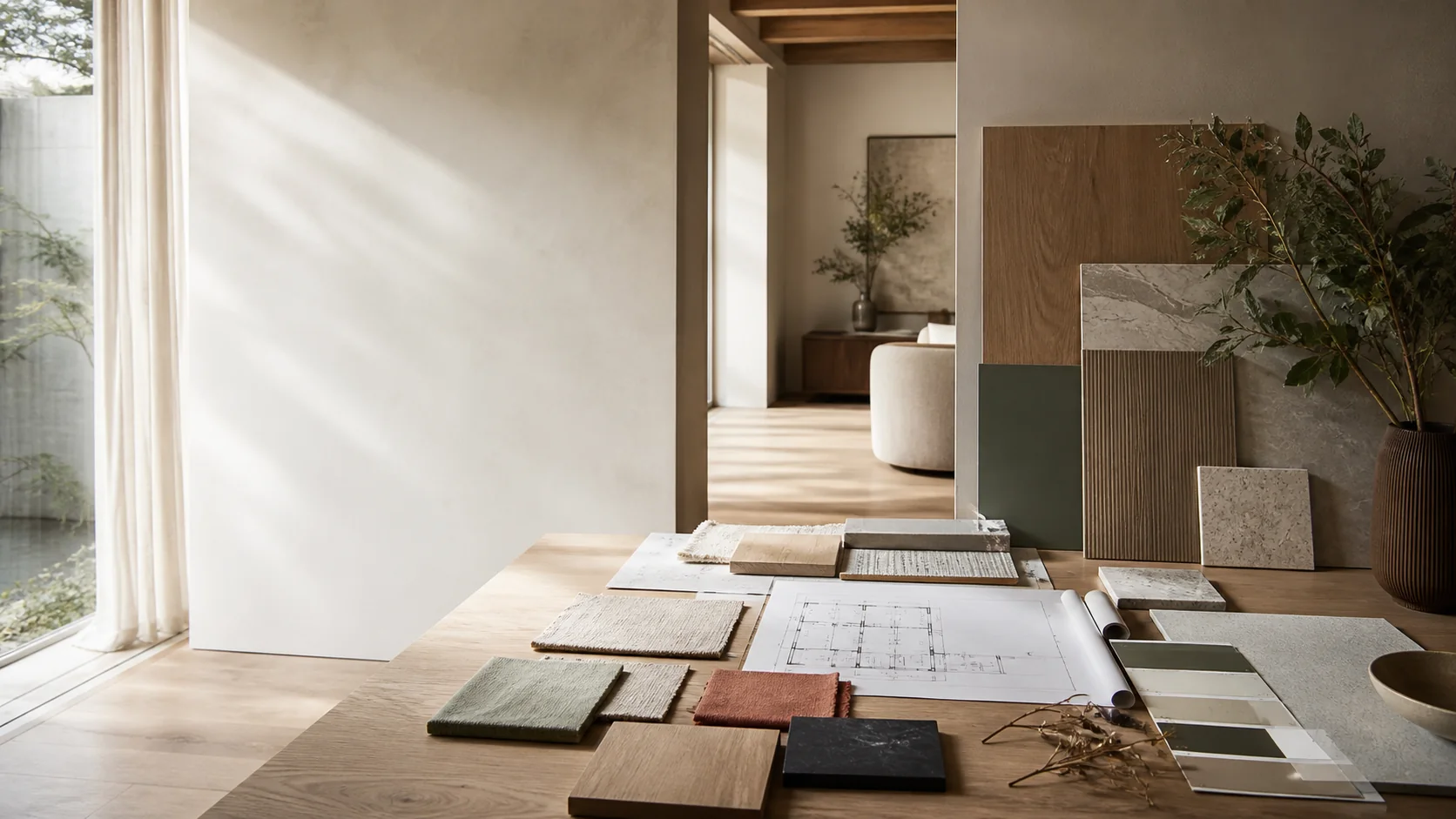
A sunlit design workroom with material samples, a floor plan, stone, timber, and fabric

INTERIORS / MATERIALS / EVERYDAY LIFE

Design the room before you decorate it.

Independent field notes for shaping spaces around light, proportion, material, movement, and the way a room needs to work.Open the working brief
01 Read the room02 Set the palette03 Edit with purpose

THE WORKING BRIEF

Start with the life inside the room.

A plan becomes more useful when it describes what should happen, what should feel easier, and what the existing space is already telling you.
  1. 01 / USE

    Observe the daily pattern.

    Notice arrival points, conversation areas, quiet corners, storage friction, daylight, and the routes people naturally take. These practical details give the design a real job.

  2. 02 / PROPORTION

    Give each element enough room.

    Scale, spacing, sight lines, and negative space influence calm long before a colour is chosen. Test the arrangement before committing to finishes.

  3. 03 / ATMOSPHERE

    Describe the feeling in plain language.

    Warm, focused, grounded, open, intimate: a small set of useful words can guide materials and lighting more reliably than a crowded inspiration board.

MATERIAL PALETTE

Let contrast come from texture, not clutter.

Durable rooms often rely on a restrained family of materials that change with light and age with dignity.
01 / WARMTH

Earth and timber

Use warm notes where they support comfort, tactility, and a sense of welcome.
02 / QUIET

Stone and chalk

Build a calm base that lets form, shadow, and useful objects carry the detail.

03 / DEPTH

Green and charcoal

Add measured depth to frame views, anchor zones, and connect the room to nature.

FROM IDEA TO ROOM

A four-pass design method.

01

Measure what exists

Record dimensions, openings, fixed services, natural light, and the pieces that must remain.

02

Map the activities

Arrange the room around movement, comfort, access, storage, and the moments that matter most.

03

Sample in place

View colour and material together, at different times of day, before making a final commitment.

04

Edit the whole

Remove what competes, repeat what connects, and leave enough space for the room to breathe.

ROOM NOTES

Questions worth carrying into the next decision.

LIGHTHow does the room change from morning to evening?Observe colour temperature, glare, shadows, and where useful task lighting is still missing.Read the planning guide
LONGEVITYWhat will this material ask of daily life?Consider cleaning, repair, patina, replacement, and whether perfection is necessary for the intended use.Read the materials guide
COHERENCEWhich idea deserves to repeat?A recurring line, material, tone, or proportion can connect distinct areas without making them identical.Read the editing guide

THE OCCASIONAL WORKROOM NOTE

Keep one good design question nearby.

Request occasional notes on rooms, materials, colour, and practical planning, then confirm your address through double opt-in.
We will send a confirmation link. Nothing is subscribed until you confirm.

Requesting updates sends a confirmation email. Confirm your address to subscribe. Read our privacy and email information, or unsubscribe from our publishing emails.